How robotic-assisted knee replacement improves precision and alignment, what the evidence shows about outcomes, and what recovery involves.
Christopher Buckle
Knee Treatment
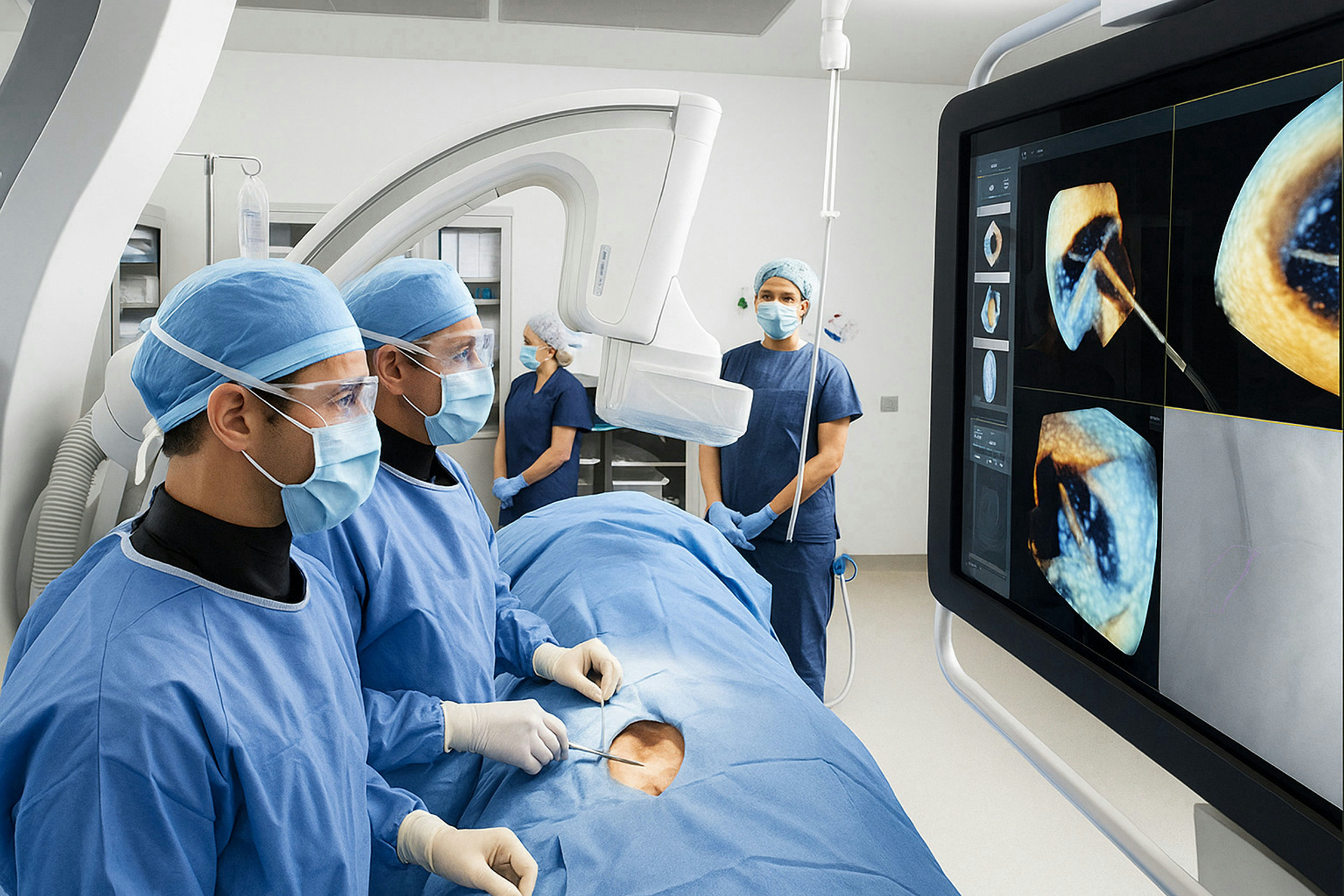
Precision Technology for a Better-Fitting Knee
Robotic-assisted surgery brings computer-guided precision to knee replacement, helping surgeons plan and execute bone cuts with greater accuracy than traditional manual instruments allow. It doesn't replace surgical skill or judgement; it supports them with detailed 3D imaging and real-time feedback during the operation.
How Robotic-Assisted Knee Replacement Works
Before surgery, pre- or intra-operative scanning is used to build a 3D model of the knee. This allows the surgical team to plan implant size, positioning and alignment in detail before the operation even begins, tailoring the plan to the patient's own anatomy rather than relying on standard jigs alone.
During the operation, the surgeon uses a robotic-arm system to carry out the plan. The robot doesn't operate independently: the surgeon guides the arm throughout, and the system provides real-time feedback, keeping bone cuts within the planned boundaries.
Studies comparing robotic-assisted to conventional knee replacement consistently show improved accuracy in implant positioning, with mean alignment errors of around 1 degree compared with several degrees using manual technique, and a higher proportion of patients achieving their planned alignment within a narrow margin.
It's worth being clear about what this precision does and doesn't guarantee. Better alignment accuracy has not consistently translated into better short- or medium-term function or pain scores compared with well-performed conventional surgery in research to date. The main proven benefits are more reliable, reproducible positioning and, in some studies, slightly less soft-tissue damage during the procedure.
Robotic assistance tends to offer the most value in more complex cases: significant bony deformity, previous fracture or surgery around the knee, unusual anatomy, or revision procedures where precise, reproducible positioning is harder to achieve by eye and feel alone. For straightforward knees, conventional and robotic-assisted techniques tend to produce very similar outcomes in experienced hands.
Recovery follows a similar path to conventional knee replacement. Most patients are up and walking with support on the day of surgery or the day after, progress from crutches to a stick over a couple of weeks, and return to normal daily activities within four to six weeks. Robotic assistance changes how the implant is positioned; it doesn't remove the need for physiotherapy, which remains essential to regaining strength and range of motion.

Is Robotic-Assisted Knee Replacement Right for You?
Robotic assistance is one of several tools available to help achieve a well-positioned, well-balanced knee replacement, and it can be particularly valuable where anatomy is complex. Whether it's the right approach for you depends on your individual knee, your goals, and a detailed discussion with your surgeon. If you'd like to find out more, please get in touch to arrange a consultation.